🎈
Grammar Mistakes That Are Silently Killing Your IELTS Score
IELTS
5/16/20266 min read
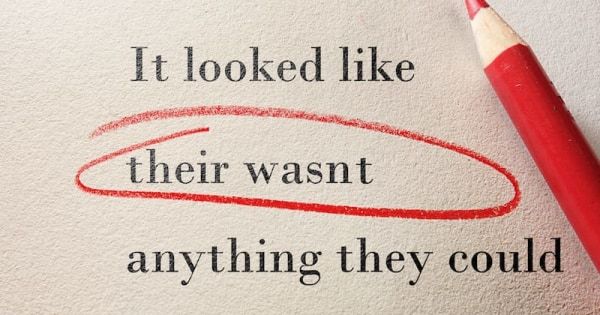
You studied hard. You practiced writing essays every day. You felt confident walking into the exam room. But when your results came back, your Writing score was lower than expected — and you have no idea why.
For many IELTS candidates, the culprit is not a lack of ideas or poor essay structure. It is grammar. Specifically, it is the kind of grammar mistakes that feel natural when you write them but quietly drag your band score down without you even noticing.
Grammar accounts for 25% of your IELTS Writing score under the criterion called Grammatical Range and Accuracy. Examiners look at two things: the variety of sentence structures you use, and how accurately you use them. Even one type of repeated error — appearing multiple times across your essay — can cap your score at Band 5 or 6, no matter how strong your ideas are.
Here are the most common grammar mistakes that are silently hurting IELTS candidates, and exactly how to fix them.
1. Subject-Verb Agreement Errors
This is one of the most frequent mistakes in IELTS Writing, and it is surprisingly easy to make — especially in long, complex sentences.
The mistake:
"The number of students who enroll in online courses are increasing."
The subject here is "the number" — singular — not "students." The correct verb is is, not are.
Corrected:
"The number of students who enroll in online courses is increasing."
Why it happens: When a long phrase comes between the subject and the verb, writers lose track of what the subject actually is. The noun closest to the verb (students) feels like the subject, but it is not.
Fix it: Always identify the true subject of your sentence before choosing your verb. Ask yourself: what is this sentence actually about?
2. Incorrect Use of Articles (a, an, the)
Articles seem small and harmless, but misusing them is one of the clearest signals to an examiner that a writer lacks grammatical control. For speakers of languages that do not have articles — such as Indonesian, Mandarin, Arabic, and Russian — this is a particularly common struggle.
The mistake:
"Government should take action to reduce pollution." "I visited a university yesterday. University had beautiful campus."
Corrected:
"The government should take action to reduce pollution." "I visited a university yesterday. The university had a beautiful campus."
The basic rules to remember:
Use a/an when introducing something for the first time or when referring to one of many.
Use the when referring to something specific or already mentioned.
Use no article with plural or uncountable nouns used in a general sense ("Money is important" — not "The money is important").
3. Tense Inconsistency
Switching between tenses without a clear reason is a mistake that disrupts the flow of your writing and confuses the reader.
The mistake:
"Many companies moved their operations overseas because they want to reduce costs and workers are paid less."
This sentence mixes past tense (moved) with present tense (want, are paid) without logical reason.
Corrected:
"Many companies have moved their operations overseas because they want to reduce costs and workers are paid less."
Fix it: Before you start writing, decide on your primary tense. For Task 2 essays discussing general truths and current situations, present tense is usually your default. For Task 1 reports on past data, past tense is appropriate. Stay consistent throughout.
4. Comma Splices and Run-On Sentences
A comma splice happens when two complete sentences are joined with only a comma — no conjunction and no appropriate punctuation. This is a grammatical error that many candidates do not even know has a name.
The mistake:
"The population in urban areas is growing rapidly, governments must invest in better infrastructure."
These are two independent clauses. A comma alone cannot join them.
Corrected options:
"The population in urban areas is growing rapidly, so governments must invest in better infrastructure." "The population in urban areas is growing rapidly. Therefore, governments must invest in better infrastructure." "Because the population in urban areas is growing rapidly, governments must invest in better infrastructure."
Fix it: Whenever you use a comma to connect two ideas, check whether each side could stand alone as a complete sentence. If so, you need either a coordinating conjunction (for, and, nor, but, or, yet, so) or a full stop.
5. Misusing or Overusing the Passive Voice
The passive voice is not wrong — in fact, IELTS examiners expect to see it used appropriately. The problem arises when candidates use it incorrectly or use it so excessively that the writing becomes awkward and unclear.
Incorrect passive:
"The problem was suggested by many researchers that it would worsen."
Overused passive (sounds unnatural):
"It is believed by most people that steps should be taken by governments so that the issue can be addressed."
Better — balanced use of active and passive:
"Most people believe that governments should take steps to address the issue."
Fix it: Use the passive when the agent (the doer) is unknown, unimportant, or obvious. Use the active voice when you want clarity and directness. A good essay mixes both.
6. Errors with Relative Clauses
Relative clauses (who, which, that, whose, where) are a sign of grammatical range — but only when used correctly. Many candidates confuse who and which, omit necessary pronouns, or create dangling clauses.
The mistake:
"The people which live in rural areas often lack access to healthcare." "This is a problem that it needs immediate attention."
Corrected:
"The people who live in rural areas often lack access to healthcare." "This is a problem that needs immediate attention."
The rule: Use who for people, which for things (in non-defining clauses), and that for people or things (in defining clauses). Never use it inside a relative clause — the relative pronoun already replaces the noun.
7. Wrong or Missing Prepositions
Prepositions are notoriously difficult because they do not follow strict logical rules — they must be memorized in context. Errors here are extremely common among IELTS candidates of all levels.
Common mistakes:
"This problem is similar with the one we discussed." → should be similar to "She is interested on learning new languages." → should be interested in "The rise of crime is related with poverty." → should be related to
Fix it: Learn prepositions as part of fixed phrases, not as individual words. Study collocations — combinations of words that naturally go together — such as:
depend on, result in, contribute to, aware of, responsible for, associated with
8. Conditional Sentence Errors
IELTS Task 2 essays often involve discussing hypothetical situations, consequences, and recommendations — all of which require conditional structures. Many candidates mix up the forms or use them incorrectly.
The mistake:
"If the government will invest in education, the economy would improve." "If I would have more time, I will study harder."
Corrected:
"If the government invested in education, the economy would improve." (Second conditional — hypothetical present) "If I had more time, I would study harder."
Quick reference:
First conditional (real/possible): If + present simple, will + base verb
Second conditional (hypothetical present): If + past simple, would + base verb
Third conditional (hypothetical past): If + past perfect, would have + past participle
Never use will or would in the if clause.
9. Faulty Parallelism
Parallelism means that items in a list or comparison should follow the same grammatical form. When they do not, sentences feel clunky and unbalanced — and examiners notice.
The mistake:
"The benefits of exercise include losing weight, to improve mood, and you will sleep better."
Corrected:
"The benefits of exercise include losing weight, improving mood, and sleeping better."
Fix it: Whenever you write a list, read it aloud and check that every item uses the same grammatical structure — all nouns, all gerunds, all infinitives, or all clauses.
10.Overcomplicating Sentences to Sound Academic
This one may surprise you — but trying too hard to sound impressive is itself a grammar trap. Many candidates write sentences so long and tangled that they contain multiple errors. Examiners penalize inaccuracy, even in complex sentences.
The mistake:
"Although the fact that many governments around the world are implementing the various policies which are being designed to address the issue of the climate change, however the results are not being seen in the significant way yet."
This sentence has redundant phrases, incorrect use of however after although, and unnecessary articles.
Corrected:
"Although many governments have implemented policies to address climate change, significant results have yet to be seen."
Fix it: Aim for clarity first. A shorter, accurate sentence will always score higher than a long, error-filled one. Show grammatical range by using a variety of sentence types — not by making every sentence as long as possible.
Final Thoughts: Accuracy Before Complexity
The path to a higher IELTS Writing band score is not about memorizing obscure grammar rules. It is about eliminating the recurring errors that undermine your writing — mistakes you are probably making right now without realizing it.
Start by identifying which of these ten errors appears most in your practice essays. Focus on one category at a time. Rewrite your past essays with corrections. Over time, accuracy becomes habit, and habit becomes your natural writing style.
Remember: examiners are not looking for perfection. They are looking for consistent control. Eliminate these silent score-killers, and your band score will reflect the hard work you have already put in.